
Conecuh Projected Release Date
A projected release date is a scheduled or calculated date. It is not the same as the actual release event. In Alabama, ADOC's definitions use the term "Minimum Release Date" for the earliest scheduled date an inmate can be released to probation or end of sentence. That date can change when good time is lost, when the circuit clerk sends new cases, or when the current sentence changes.
For a Conecuh County jail detainee, there may be no projected release date at all. A local detainee can leave after bond is posted, a judge orders release, charges are dismissed, time served is complete, a hold clears, or transfer occurs. The sheriff and court docket are the correct local sources.
ADOC Minimum Release Date
The ADOC current inmate search is useful when the person is currently in Alabama state prison. It is not a historical release archive. If the person appears, read the custody location and release-date-related fields. If the person does not appear, ADOC's own warning matters: historical data is not available online.
The ADOC definitions page identifies Minimum Release Date, Parole Consideration Date, and Parole Status. A parole consideration date is a board-review date, not a promise of release. Parole status can change after release if the person becomes delinquent or revoked.
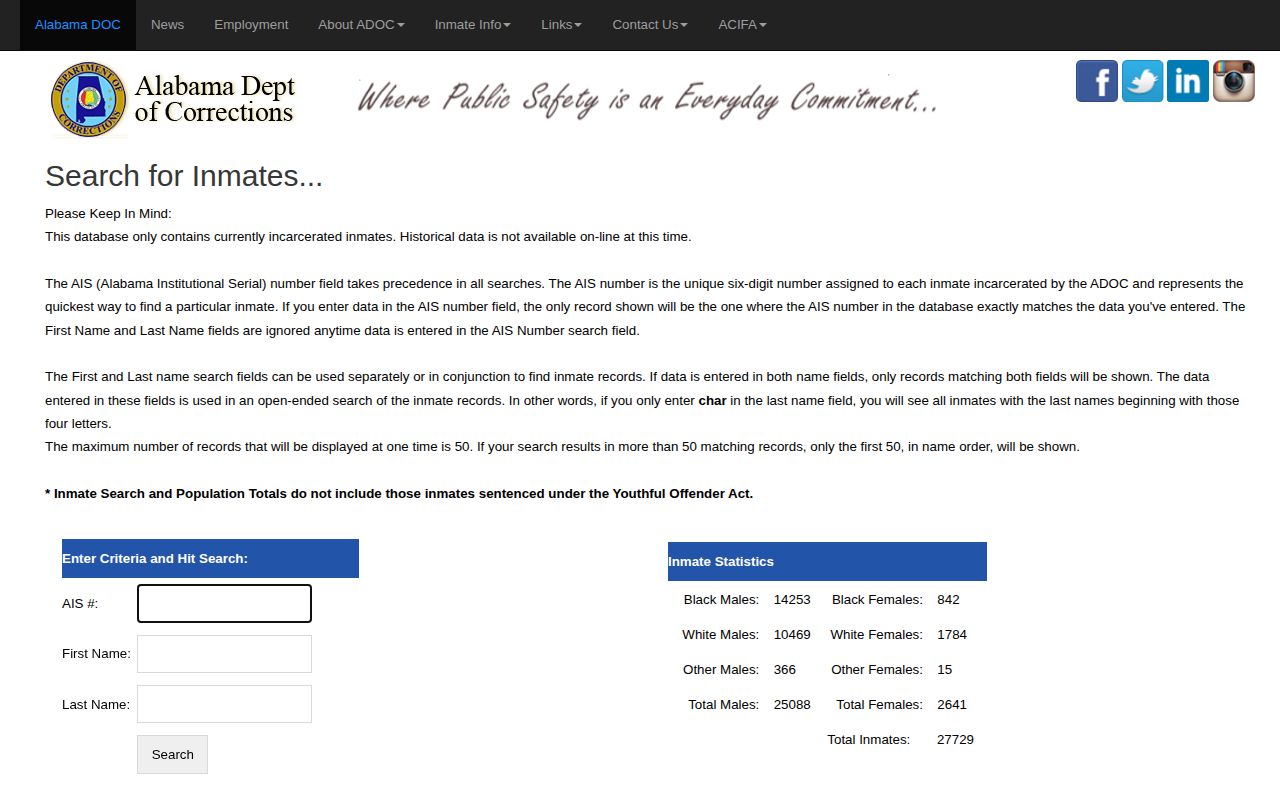
The state search screenshot fits current state-prison cases, not routine Conecuh County jail releases.
Find a Conecuh Release Date
Start with where the person is held or was sentenced. That choice controls the records path.
- For a Conecuh jail detainee, call the sheriff and ask whether release depends on bond, court order, sentence, hold, or transfer.
- Check Conecuh Circuit or District Court records for bond, sentence, dismissal, probation, split sentence, or time-served entries.
- For a current state prisoner, search ADOC by AIS number first, then by name if AIS is unknown.
- For parole timing, check ABPP hearing schedules, results, and the Evergreen Field Office.
- For alerts, use VINELink inmate search where the custody system participates.
Alabama Good-Time Release Rules
Alabama correctional incentive time is governed by Ala. Code Section 14-9-41. The research source shows Class I earning 30 days for each 30 days served, Class II earning 15 days per 30 days, Class III earning 5 days per 30 days, and Class IV earning none. The statute also has exclusions, including Class A felonies, certain crimes causing death by deadly weapon, life or death sentences, sentences over 15 years, and child sex offenses.
Good time can make a projected release date earlier than the sentence end date, but it is not available to every person and can be lost through disciplinary action. Do not apply prison good-time rules to a local pretrial detainee who has not been sentenced to ADOC.
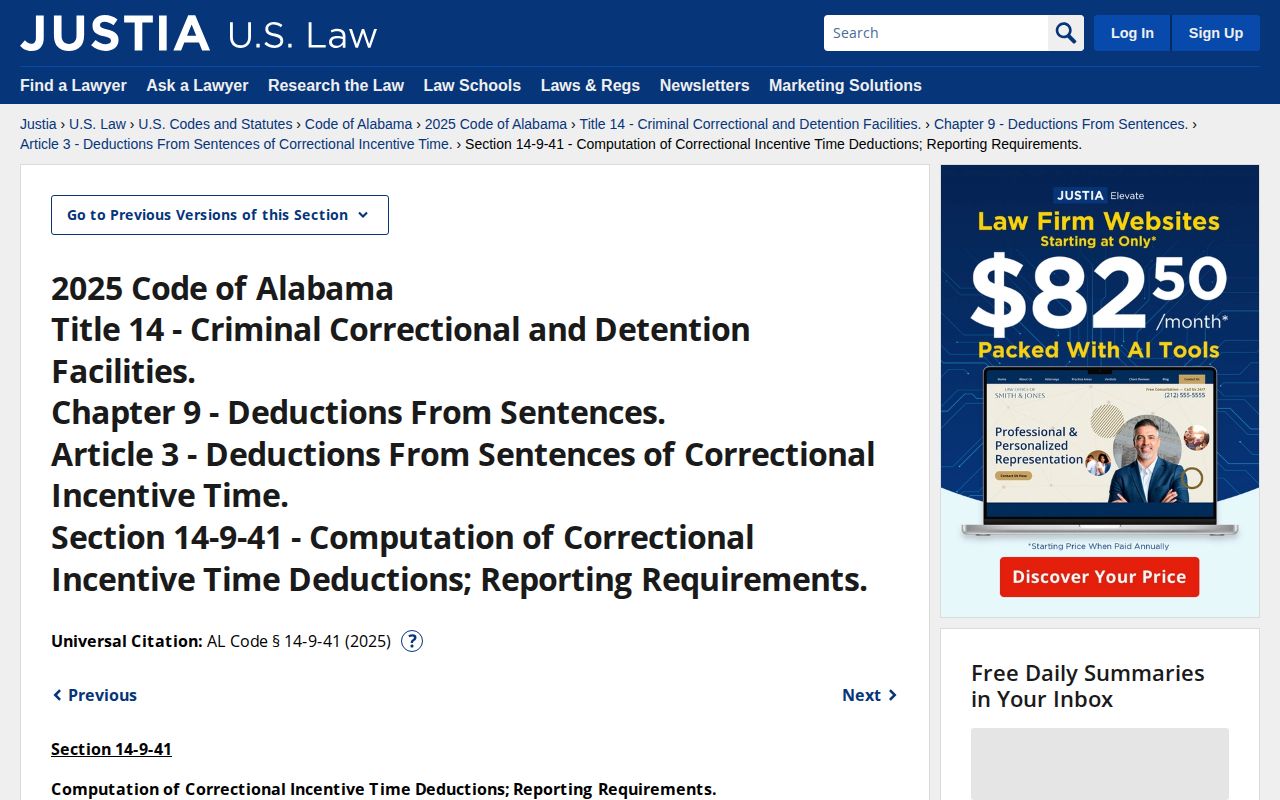
The statute source is the correct place to verify class rules and exclusions before relying on any date estimate.
Mandatory Supervision Before Release
Alabama mandatory supervision is a separate mechanism. Under Ala. Code Section 15-22-26.2, covered ADOC inmates may be released to supervision by ABPP before the release date: three to five months for sentences of five years or less, six to nine months for more than five but less than 10 years, and 10 to 12 months for sentences of 10 years or more. The statute excludes certain child sex offenses and requires victim notification.
This does not mean a Conecuh jail detainee has an automatic early release date. It applies to covered state prisoners and supervision by the Board of Pardons and Paroles.
Parole Date vs Release Date
Parole eligibility is another distinct concept. Ala. Code Section 15-22-28 controls initial parole consideration timing. ABPP says eligibility depends on sentence, crime, jail credit, good-time ability, time served, and court orders. For certain violent Class A felonies, the statute includes an 85 percent or 15 years, whichever is less, rule for initial parole consideration.
A parole grant can point toward release, but it may not equal physical release that day. ABPP's Public Information Unit has routing for questions about people granted parole but not yet released, while the Evergreen Field Office is the local supervision path for Conecuh County.
Why Release Dates Change
Release dates move because records and custody status move. A date should be treated as current as of the source record, not permanent.
| Cause | Effect on date |
|---|---|
| Disciplinary action | Can remove good time and move release later. |
| New case or amended sentence | Can change the sentence calculation. |
| Detainer or hold | Can move the person to another agency instead of release to the community. |
| Parole denial or continuation | Can delay release tied to board action. |
| Mandatory supervision processing | Can move a covered state prisoner into supervised release before the end date. |
Note: For a Conecuh County local jail sentence, verify date and time with the sheriff and the legal authority in the court docket.